Achilles Tendinitis
Achilles tendonitis is an inflammation of the largest tendon in the body, causing pain and stiffness at the back of the ankle. A custom foot orthotic corrects foot biomechanics and promotes tendon healing.
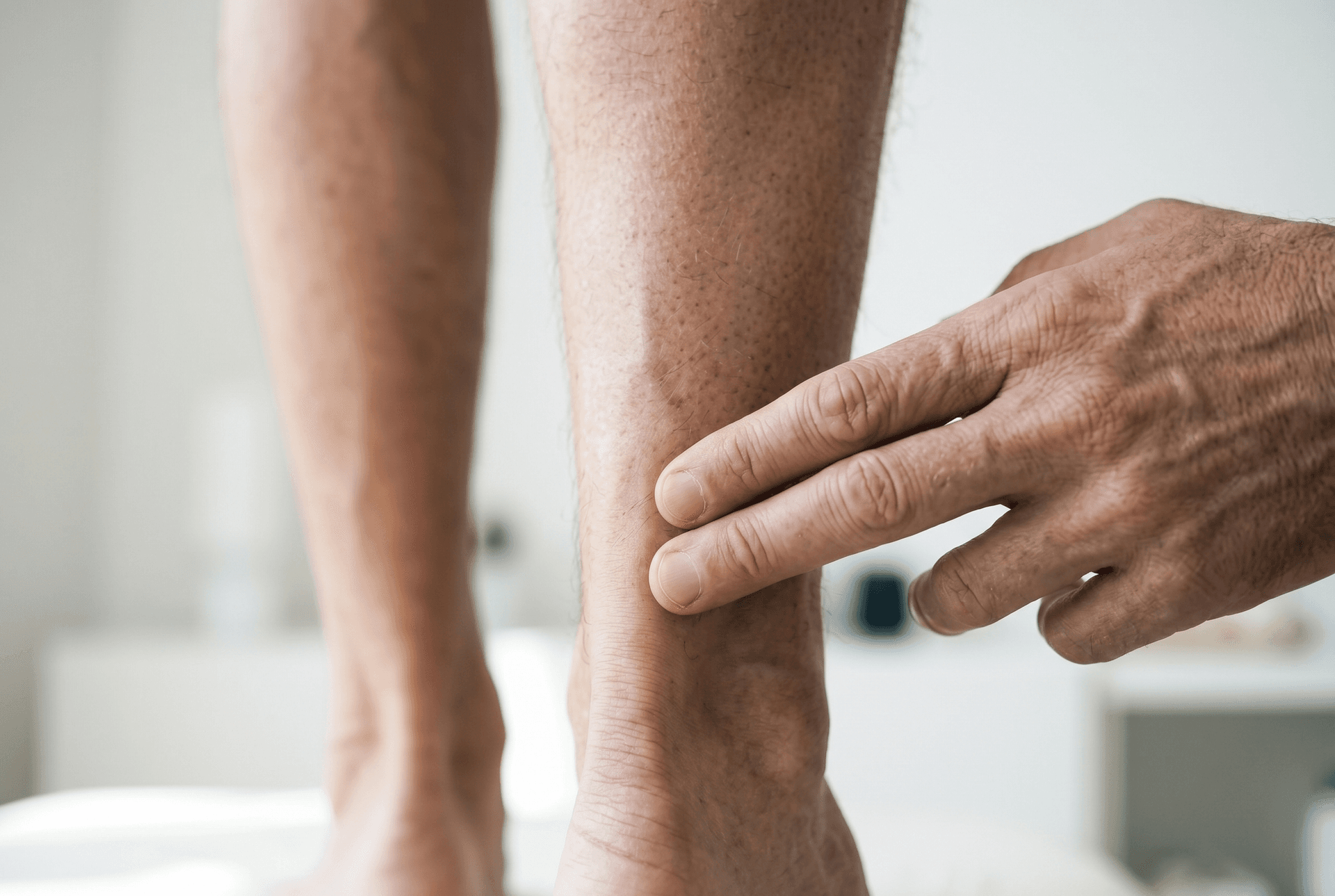
What is Achilles tendonitis?
Achilles tendonitis is an inflammatory or degenerative condition affecting the Achilles tendon, the largest and strongest tendinous structure in the human body. This tendon, measuring approximately 15 cm in length, connects the calf muscles (gastrocnemius and soleus) to the heel bone (calcaneus) and plays a fundamental role in walking, running and jumping.
There are two main forms of Achilles tendonitis. Insertional tendonitis affects the lower portion of the tendon, where it attaches to the calcaneus. Mid-portion tendonitis affects the central part of the tendon, about 2 to 6 cm above the heel. The latter is the most common form, especially among runners.
When tendonitis becomes chronic (longer than 6 weeks), we instead speak of tendinosis, which is characterised by degeneration of the tendon tissue with thickening and the formation of microtears. Tendinosis requires longer treatment but responds well to foot orthotics combined with an eccentric exercise program.
Achilles tendonitis affects approximately 6% of the general population and up to 50% of long-distance runners during their athletic career.
Causes of Achilles tendonitis
- Overtraining: too rapid an increase in training volume or intensity, especially in running.
- Excessive pronation: collapse of the plantar arch causes torsion of the Achilles tendon with each step, irritating the tendon fibres.
- Calf stiffness: a lack of flexibility in the calf muscles increases tension on the Achilles tendon.
- Inappropriate shoes: shoes without support or with insufficient drop increase the load on the tendon.
- Training surface: running on hard or uneven surfaces increases stress on the tendon.
- Age: the tendon's vascularisation decreases with age, making it more vulnerable to micro-trauma. Risk increases after age 30.
- Metabolic factors: diabetes, the use of certain antibiotics (fluoroquinolones) and high cholesterol can weaken the tendon.
Symptoms of Achilles tendonitis
- Pain at the back of the ankle: pain localised along the Achilles tendon, either at its insertion on the heel or in its middle portion.
- Morning stiffness: the tendon is particularly stiff and painful on the first steps in the morning, loosening up with movement.
- Pain at the start of activity: pain appears at the beginning of exercise, fades during effort (warm-up phase), then returns after stopping.
- Thickening of the tendon: the tendon can become visible and palpable, with a nodule in chronic cases.
- Crepitus: a creaking or rubbing sensation along the tendon during foot movements.
- Weakness: decreased propulsive strength when walking or running, difficulty rising onto the toes.
Treatment with foot orthotics
Custom foot orthotics play a key role in the treatment of Achilles tendonitis:
- Integrated heel lift: raising the heel shortens the travel of the Achilles tendon and reduces the tension placed on it with each step.
- Pronation control: by correcting excessive pronation, the orthotic eliminates the torsion of the tendon that irritates its fibres.
- Heel cushioning: absorbent materials reduce heel impact and protect the tendon from repeated shocks.
- Foot stabilisation: by improving overall alignment, the orthotic reduces the compensations that overload the tendon.
Treatment is complemented by an eccentric calf exercise program (Alfredson protocol), regular stretching and a progressive modification of physical activity.
When to consult an orthotist?
Consult an orthotist if:
- You feel persistent pain at the back of the ankle
- Morning stiffness in the tendon does not improve over time
- Pain prevents you from running or walking normally
- You notice thickening of the Achilles tendon
- You wish to prevent recurrence after an episode of tendonitis
Our orthotists are members of the OTPQ and AOPQ. Early treatment significantly reduces the risk of progressing to chronic tendinosis or tendon rupture.
Treat your Achilles tendonitis
Book an appointment with a orthotist for a comprehensive evaluation and custom orthotics.
Frequently asked questions about Achilles tendonitis
What is Achilles tendinitis?
Achilles tendinitis is inflammation of the Achilles tendon, the largest and strongest tendon in the human body, which connects the calf muscles (gastrocnemius and soleus) to the calcaneus (heel bone). It causes pain and stiffness at the back of the ankle.
How do foot orthotics help with Achilles tendinitis?
Foot orthotics reduce tension on the Achilles tendon by correcting foot biomechanics. An integrated heel lift can shorten the tendon's travel, and pronation control reduces the torsional forces that irritate the tendon.
How long does Achilles tendinitis last?
With proper treatment, acute tendinitis heals in 4 to 6 weeks. Chronic tendinitis (tendinosis) can require 3 to 6 months of treatment. Relative rest and foot orthotics accelerate healing.
Can I keep running with Achilles tendinitis?
It is recommended to significantly reduce running during the acute phase. A progressive return-to-running program with eccentric exercises and adapted orthotics allows a gradual comeback once pain is controlled.
What exercises are recommended for Achilles tendinitis?
Eccentric calf exercises (heel drops at the edge of a step) are the cornerstone of treatment. Gentle calf and plantar-fascia stretches are also beneficial. Your orthotist can teach you the appropriate program.
Can Achilles tendinitis lead to tendon rupture?
If neglected, chronic tendinitis progressively weakens the tendon and increases the risk of rupture, especially during sudden efforts. Early treatment including foot orthotics significantly reduces this risk.