Flat Feet
Flat feet are one of the most common foot conditions, affecting both children and adults. A custom foot orthotic can support the arch, prevent complications and relieve associated pain.
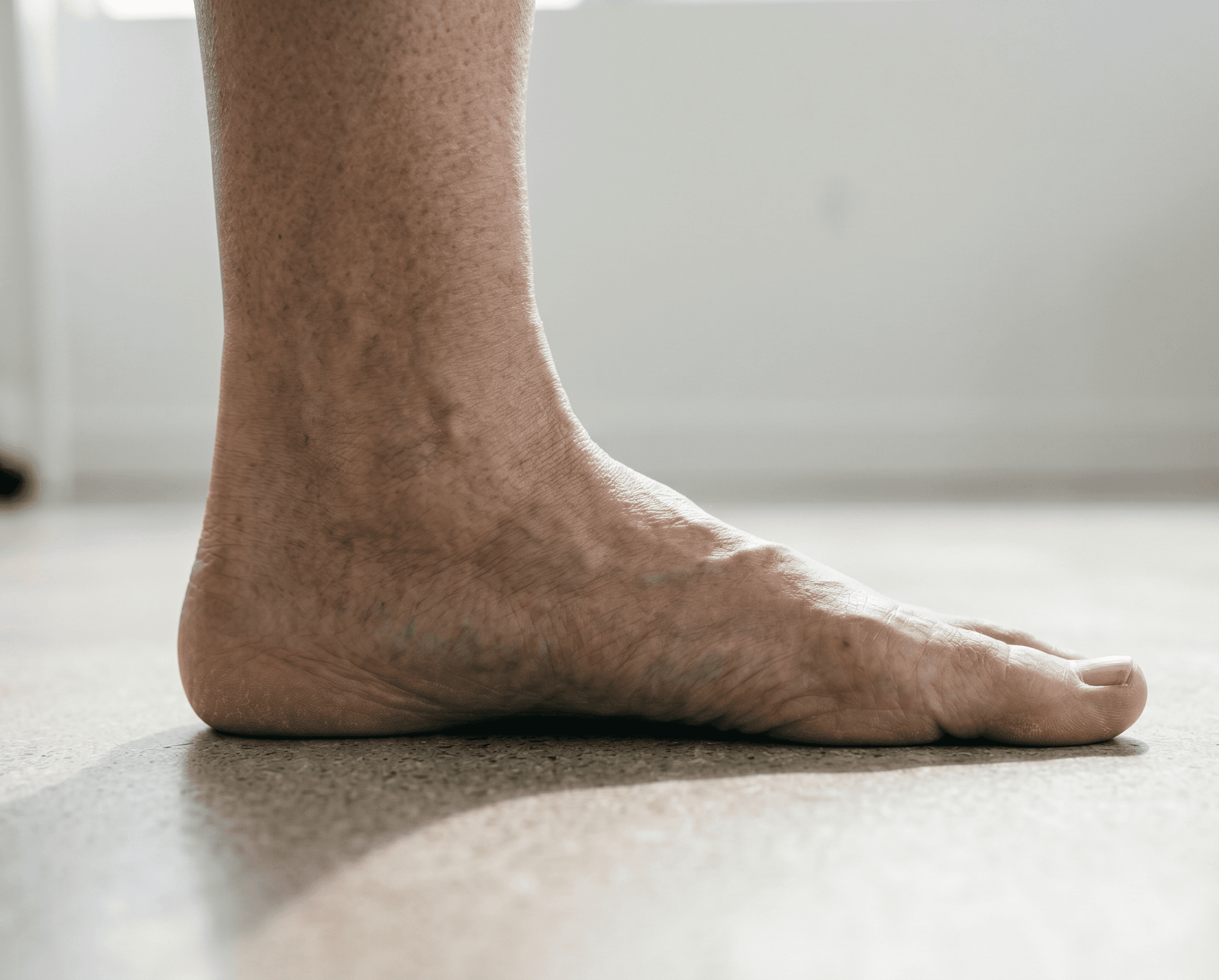
What are flat feet?
A flat foot, or pes planus, is characterised by a partial or total collapse of the inner longitudinal arch of the foot. Normally, the plantar arch creates a space under the foot when bearing weight. In a person with flat feet, this space is reduced or absent, and the sole comes into nearly full contact with the ground.
There are two main types of flat foot. The flexible flat foot, the most common, is characterised by an arch that appears when the foot is not bearing weight but collapses under body weight. The rigid flat foot, rarer, shows a permanent collapse of the arch, even when not weight-bearing, and is often associated with tarsal coalition or osteoarthritis.
Flat feet affect approximately 20 to 30% of the population. In children, they are part of normal development: the arch forms progressively between 3 and 6 years of age. However, in some children and adults the arch never fully develops or collapses over time, requiring orthopaedic intervention.
Causes of flat feet
- Heredity: foot shape and ligamentous laxity are genetic traits that predispose to flat feet.
- Muscle weakness: the intrinsic foot muscles and the posterior tibial muscle play a crucial role in maintaining the arch. Their weakening leads to collapse.
- Posterior tibial tendon dysfunction: in adults, this is the most common cause of acquired flat foot. The tendon stretches or tears, losing its ability to support the arch.
- Overweight and obesity: excess weight increases the load on the arch's supporting structures and accelerates collapse.
- Pregnancy: hormonal changes and weight gain during pregnancy can loosen foot ligaments and cause arch collapse.
- Aging: natural wear of tendons and ligaments with age contributes to the development of acquired flat foot.
- Trauma: a fracture or severe sprain of the foot can damage the supporting structures of the arch.
Symptoms of flat feet
Some people with flat feet experience no symptoms. However, when the condition becomes symptomatic, the following signs may appear:
- Pain under the foot arch: feeling of fatigue or pain under the foot, especially after prolonged standing or physical activity.
- Heel pain: increased tension on the plantar fascia from the collapse can cause plantar fasciitis.
- Knee and back pain: foot misalignment ripples through the entire joint chain, causing pain in the knee, hip and lower back.
- Uneven shoe wear: the soles wear more on the inner side due to excessive pronation.
- Rapid foot fatigue: feeling of heaviness and fatigue in the feet, especially at the end of the day.
- Swelling: swelling along the inner side of the ankle in the case of posterior tibial tendon dysfunction.
Treatment of flat feet with foot orthotics
Custom foot orthotics are the first-line treatment for symptomatic flat feet:
- Structural arch support: the orthotic provides firm support under the inner longitudinal arch, compensating for the lack of natural support.
- Pronation control: by limiting excessive pronation, the orthotic restores a more neutral alignment of the foot and reduces strain on the knees and back.
- Pressure distribution: the increased contact surface between the foot and the orthotic distributes weight evenly, reducing overload zones.
- Arch development in children: in growing children, the orthotic guides plantar arch development and can contribute to progressive correction.
Treatment is often complemented by a program to strengthen the intrinsic foot muscles and the posterior tibial muscle, as well as by recommendations for shoes with good arch support and stability control.
When to consult an orthotist?
Consult an orthotist if:
- Your flat feet cause pain in the feet, knees or back
- Your child over 5 has flat feet and complains of pain
- You notice a progressive collapse of your arch
- Your shoes wear unevenly
- You have difficulty standing for long periods or walking
Our orthotists are members of the OTPQ and AOPQ. They offer complete biomechanical analysiss for children and adults.
Relieve your flat feet
Book an appointment with a orthotist for a comprehensive evaluation and custom orthotics.
Frequently asked questions about flat feet
What are flat feet?
Flat feet is a condition in which the foot arch is collapsed or absent, causing all or nearly all of the sole to touch the ground when weight-bearing. It is one of the most common foot anomalies.
Are flat feet normal in children?
Yes, flat feet are normal in children under 3 because the arch develops progressively. If the foot remains flat after age 5-6, an assessment by an orthotist is recommended to determine whether treatment is needed.
Do foot orthotics correct flat feet?
In growing children, orthotics can guide arch development. In adults, they do not correct the bone structure but support the arch, relieve pain and prevent complications at the knees and back.
Can flat feet cause knee or back pain?
Yes, flat feet alter the alignment of the entire kinetic chain. Arch collapse causes internal rotation of the tibia which can cause knee, hip and lower-back pain.
Can I play sports with flat feet?
Absolutely. With appropriate foot orthotics and proper footwear, people with flat feet can practise most sports. Orthotics help compensate for the lack of arch support and prevent injury.
Are flat feet hereditary?
Yes, the bone structure and ligament laxity that contribute to flat feet are often hereditary. If a parent has flat feet, children have an increased risk of developing this condition.