Pied creux : causes, symptômes et traitement
Le pied creux se caractérise par une arche plantaire excessivement haute qui concentre les pressions sur le talon et l'avant-pied. Une orthèse plantaire sur mesure permet de redistribuer le poids et de prévenir les douleurs et blessures associées.
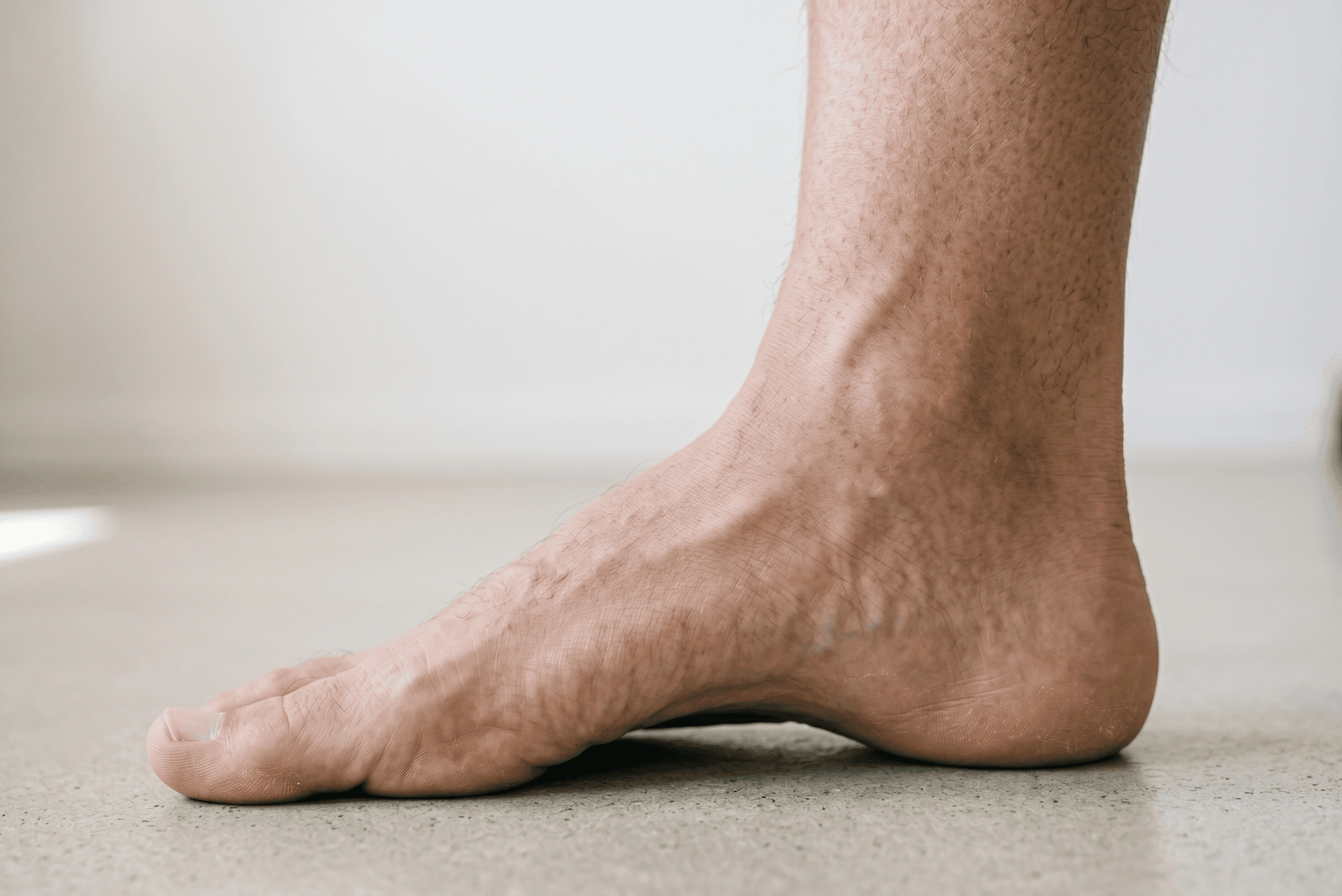
Qu'est-ce que le pied creux?
Le pied creux, ou pes cavus, est l'opposé du pied plat. Il se caractérise par une arche longitudinale anormalement élevée qui ne s'affaisse pas sous le poids du corps. Cette configuration entraîne une surface d'appui réduite : le poids se concentre principalement sur le talon et les têtes métatarsiennes (avant-pied), créant des zones de pression excessive.
Le pied creux est moins fréquent que le pied plat, touchant environ 10 à 15 % de la population. Il peut être présent dès la naissance ou se développer progressivement. Le pied creux est souvent plus rigide que le pied normal, ce qui diminue sa capacité naturelle d'amortissement et augmente le risque de blessures lors de la marche et des activités sportives.
Cette condition peut affecter un ou les deux pieds et varie en sévérité. Dans les formes légères, le patient peut être asymptomatique. Dans les formes plus prononcées, le pied creux entraîne des douleurs chroniques, une instabilité de la cheville et des déformations secondaires comme les orteils en griffe.
Causes du pied creux
- Hérédité : dans la majorité des cas, le pied creux est idiopathique avec une forte composante génétique. La structure osseuse du pied se transmet dans les familles.
- Causes neurologiques : certaines maladies neuromusculaires comme la maladie de Charcot-Marie-Tooth, la paralysie cérébrale, le spina bifida ou la poliomyélite peuvent provoquer un déséquilibre musculaire qui conduit au pied creux.
- Déséquilibre musculaire : une faiblesse des muscles intrinsèques du pied ou un raccourcissement des muscles de la jambe peut accentuer la cambrure de l'arche.
- Traumatisme : une fracture mal guérie ou des lésions ligamentaires peuvent modifier la structure du pied et contribuer à l'élévation de l'arche.
- Contracture du fascia plantaire : un fascia plantaire raccourci peut tirer l'arche vers le haut et contribuer à la formation d'un pied creux.
Symptômes du pied creux
- Douleur sous l'avant-pied : métatarsalgie causée par la concentration du poids sur les têtes métatarsiennes.
- Douleur au talon : la pression excessive sur le talon peut provoquer une talalgie ou une fasciite plantaire.
- Instabilité de la cheville : le pied creux prédispose aux entorses à répétition en raison de la supination excessive et de la surface d'appui réduite.
- Callosités : formation de durillons sous le talon et les têtes métatarsiennes en raison de la pression excessive.
- Orteils en griffe : déformation progressive des orteils causée par le déséquilibre musculaire associé au pied creux.
- Fatigue rapide : difficulté à rester debout longtemps ou à marcher de longues distances sans douleur.
Traitement du pied creux par orthèse plantaire
L'orthèse plantaire sur mesure est le pilier du traitement conservateur du pied creux :
- Augmentation de la surface d'appui : l'orthèse épouse la forme de l'arche et augmente la surface de contact entre le pied et le sol, réduisant les pics de pression sous le talon et l'avant-pied.
- Redistribution des pressions : des matériaux de densités variées permettent de redistribuer uniformément le poids du corps sous toute la surface du pied.
- Amortissement : des matériaux absorbants compensent le manque d'amortissement naturel du pied creux, protégeant les articulations des impacts.
- Stabilisation : l'orthèse limite la supination excessive et améliore la stabilité latérale, réduisant le risque d'entorses.
Quand consulter un orthésiste?
Consultez un orthésiste si :
- Vous avez des douleurs récurrentes sous l'avant-pied ou au talon
- Vous faites des entorses de la cheville à répétition
- Vos orteils commencent à se déformer en griffe
- Vous développez des callosités douloureuses sous le pied
- Vous avez de la difficulté à trouver des chaussures confortables
Nos orthésistes sont membres de l'OTPQ et de l'AOPQ. Une évaluation complète permettra de déterminer le degré de votre pied creux et le traitement le mieux adapté.
Soulagez votre pied creux
Prenez rendez-vous avec un orthésiste pour une évaluation complète et des orthèses plantaires sur mesure.
Questions fréquentes sur le pied creux
Qu'est-ce qu'un pied creux?
Le pied creux est une condition caracterisee par une arche plantaire excessivement haute. Le poids du corps se concentre principalement sur le talon et l'avant-pied, réduisant la surface d'appui et augmentant la pression sur ces zones.
Le pied creux est-il grave?
Le pied creux n'est pas grave en soi, mais il peut entraîner des complications comme la métatarsalgie, les entorses à répétition, la fasciite plantaire et l'instabilité de la cheville. Un traitement precoce par orthèse permet de prévenir ces problèmes.
Comment diagnostiqué-t-on un pied creux?
Le diagnostic est pose par un examen clinique incluant l'observation de la posture, l'analyse de la démarche et un test d'empreinte plantaire. L'orthésiste peut aussi utiliser un podoscope ou un systeme de numérisation 3D pour évaluer la structure du pied.
Les orthèses plantaires sont-elles efficaces pour le pied creux?
Oui, les orthèses plantaires sur mesure sont le traitement de première intention. Elles augmentent la surface de contact du pied avec le sol, redistribuent les pressions et améliorent la stabilité, réduisant significativement les douleurs.
Le pied creux est-il héréditaire?
Dans la majorité des cas, oui. Le pied creux est souvent d'origine idiopathique avec une composante héréditaire. Dans certains cas, il peut être associé à des conditions neurologiques comme la maladie de Charcot-Marie-Tooth.
Quelles chaussures porter avec un pied creux?
Privilégiez des chaussures avec une semelle souple, un bon amorti et suffisamment de profondeur pour accueillir une orthèse plantaire. Évitez les chaussures trop rigides ou plates. Nos orthésistes peuvent vous conseiller sur le choix adapte.