Métatarsalgie : causes, symptômes et traitement
La métatarsalgie désigne toute douleur sous l'avant-pied. Fréquente chez les sportifs et les personnes portant des talons hauts, elle se traite efficacement par une orthèse plantaire sur mesure qui redistribue les pressions.
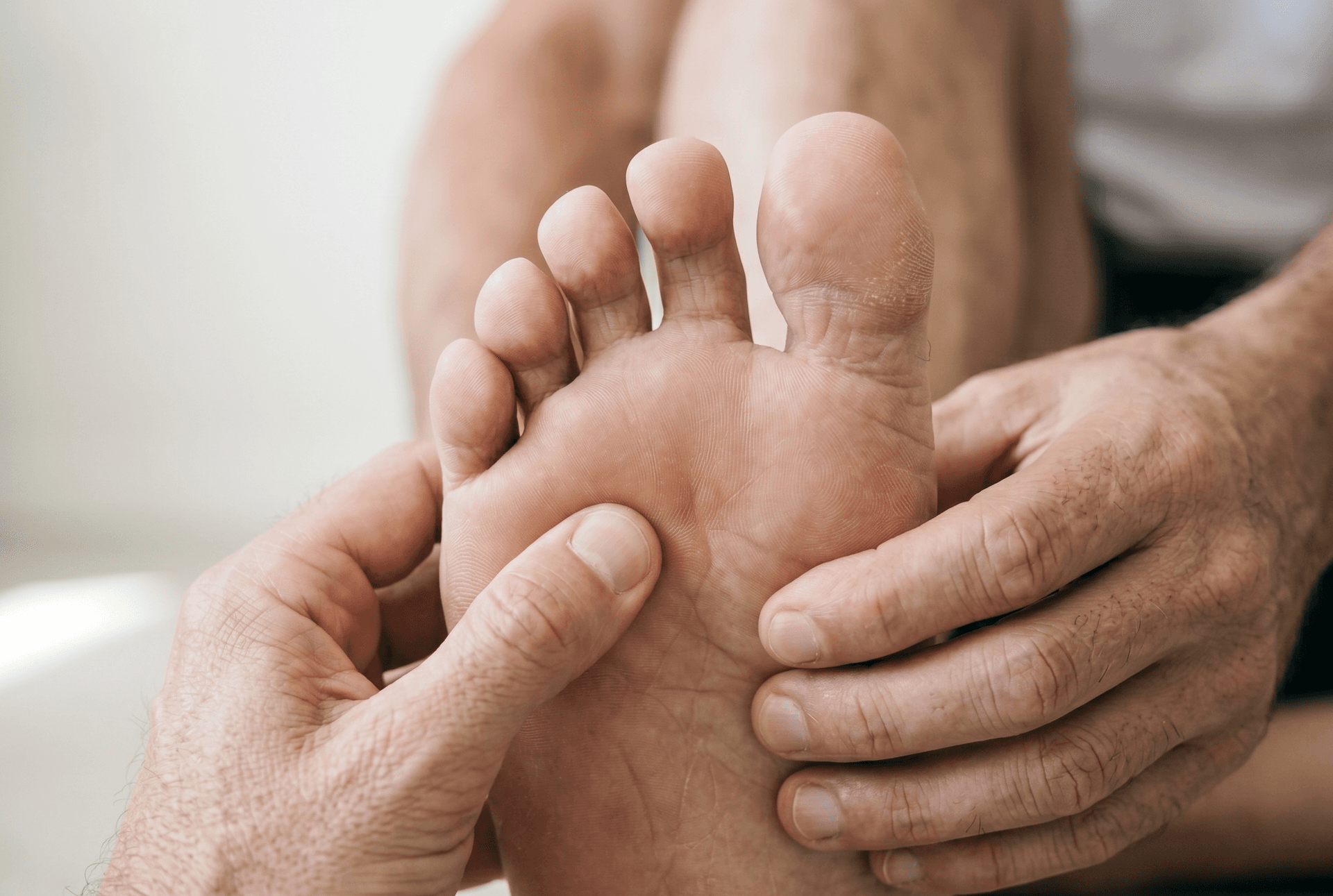
Qu'est-ce que la métatarsalgie?
La métatarsalgie est un terme médical qui désigne toute douleur localisée dans la région de l'avant-pied, plus précisément sous les têtes métatarsiennes. Les métatarses sont les cinq os longs du pied qui relient les orteils au milieu du pied, et leurs extrémités (têtes métatarsiennes) supportent une part importante du poids du corps lors de la marche et de la course.
Lorsque la répartition du poids sur l'avant-pied est déséquilibrée, certaines têtes métatarsiennes subissent une surcharge qui provoque inflammation, douleur et parfois la formation de callosités. La douleur est souvent décrite comme la sensation de marcher sur des cailloux ou une brûlure sous le pied.
La métatarsalgie est l'un des motifs de consultation les plus fréquents en orthopédie du pied. Elle peut toucher un seul métatarse ou plusieurs simultanément, et affecter un ou les deux pieds. Sans traitement, la douleur peut devenir chronique et limiter significativement la capacité de marcher et de pratiquer des activités sportives.
Causes de la métatarsalgie
- Chaussures inadaptées : les talons hauts transfèrent le poids du corps vers l'avant-pied. Les chaussures étroites compriment les métatarses et augmentent les frottements.
- Pied creux : une arche haute concentre les pressions sur le talon et l'avant-pied, surchargeant les têtes métatarsiennes.
- Hallux valgus : la déviation du gros orteil modifie la répartition des pressions et surcharge les métatarses voisins.
- Activités sportives : la course, le saut, le tennis et les sports impliquant des réceptions sur l'avant-pied augmentent les forces mécaniques.
- Surpoids : le poids supplémentaire augmente la charge sur toutes les structures du pied.
- Atrophie du coussinet graisseux : avec l'âge, le coussinet qui protège les têtes métatarsiennes s'amincit, réduisant l'amortissement naturel.
- Déformations des orteils : les orteils en marteau ou en griffe modifient la mécanique de l'avant-pied et concentrent les pressions.
Symptômes de la métatarsalgie
- Douleur sous l'avant-pied : douleur localisée sous une ou plusieurs têtes métatarsiennes, aggravée par la marche, la course ou la station debout.
- Sensation de caillou dans la chaussure : impression de marcher sur un objet dur sous l'avant-pied.
- Brûlure ou picotement : sensation de chaleur ou de brûlure sous l'avant-pied, parfois accompagnée de picotements dans les orteils.
- Callosités : formation de durillons sous les têtes métatarsiennes en raison de la pression excessive.
- Aggravation pieds nus : la douleur s'intensifie lors de la marche pieds nus sur des surfaces dures.
- Soulagement au repos : la douleur diminue avec le repos et la décharge du pied.
Traitement de la métatarsalgie par orthèse plantaire
L'orthèse plantaire sur mesure est le traitement de référence pour la métatarsalgie :
- Appui rétrocapital : un relief placé derrière les têtes métatarsiennes soulève les métatarses et redistribue les pressions vers la voûte plantaire.
- Zones de décharge : des cavités spécifiques creusées dans l'orthèse éliminent la pression directe sur les têtes métatarsiennes les plus douloureuses.
- Amortissement renforcé : des matériaux absorbants sous l'avant-pied compensent la perte du coussinet graisseux naturel.
- Correction de l'alignement : l'orthèse corrige les anomalies biomécaniques sous-jacentes (pied creux, hallux valgus) qui contribuent à la surcharge de l'avant-pied.
Quand consulter un orthésiste?
Consultez un orthésiste si :
- Vous ressentez une douleur persistante sous l'avant-pied
- Vous avez l'impression de marcher sur des cailloux
- Des callosités douloureuses se forment sous l'avant-pied
- La douleur vous empêche de pratiquer vos activités sportives
- Le changement de chaussures n'apporte pas de soulagement suffisant
Nos orthésistes sont membres de l'OTPQ et de l'AOPQ. Ils identifieront la cause précise de votre métatarsalgie et concevront une orthèse adaptée à votre condition.
Soulagez votre métatarsalgie
Prenez rendez-vous avec un orthésiste pour une évaluation complète et des orthèses plantaires sur mesure.
Questions fréquentes sur la métatarsalgie
Qu'est-ce que la métatarsalgie?
La métatarsalgie est une douleur localisée sous l'avant-pied, au niveau des tetes métatarsiennes. C'est un terme général qui désigne toute douleur dans cette region, souvent décrite comme une sensation de marcher sur des cailloux.
Quelles sont les causes les plus fréquentes de métatarsalgie?
Les causes incluent le port de chaussures inadaptees (talons hauts, chaussures étroites), les anomalies biomécaniques du pied (pied creux, hallux valgus), le surpoids, les activités sportives à impact élevé et le vieillissement du coussinet graisseux sous l'avant-pied.
L'orthèse plantaire soulage-t-elle la métatarsalgie?
Oui, l'orthèse plantaire sur mesure est très efficace pour la métatarsalgie. Elle redistribue les pressions sous l'avant-pied, intègre un appui retrocapital qui souleve les tetes métatarsiennes et peut inclure des zones de decharge ciblées.
Puis-je continuer à porter des talons hauts avec une métatarsalgie?
Les talons hauts augmentent considérablement la pression sur l'avant-pied. Il est recommande de limiter leur port et de privilegier des chaussures avec un talon de 3 cm ou moins. Des orthèses fines peuvent être adaptées à certaines chaussures plus habillées.
La métatarsalgie peut-elle guerir d'elle-meme?
Une métatarsalgie légère peut s'améliorer avec du repos et un changement de chaussures. Cependant, les cas persistants nécessitent généralement des orthèses plantaires pour corriger la biomécanique sous-jacente et prévenir les récidives.
Combien de temps dure le traitement de la métatarsalgie?
Avec des orthèses plantaires sur mesure, la majorité des patients ressentent un soulagement significatif en 2 à 4 semaines. Le port continu des orthèses est recommande pour prévenir les récidives.